The Smart Student's B.Tech Guide: 10 Things to Cross-Check Before
Choosing an Engineering College in Bhubaneswar.
Bhubaneswar's student hubs are chaotic right now. If you take a walk
through Patia, drive past Infocity, or head toward the campus clusters
near Khandagiri, and you are hit by a wall of massive promotional
banners. They all scream the exact same script:
"100% Placements," "State-of-the-Art Labs," &
"Global Recognition."
A glossy brochure won't save your career if the actual classroom
execution is dead. If you are sorting through OJEE choices or trying
to figure out where your JEE Main rank actually counts, you need to
look past the marketing paint. Use this blunt 10-point checklist to
separate genuine launchpads from glorified coaching institutions.
1. The Accreditation Trap: Reading Between the Lines
Don't trust what a college says about its own quality. Look at who checks
their work when the marketing teams leave.
Category of College
Total 4-Year Tuition Fee Range
Average Placement Package
Target Audience
Category of College
Premium National Institutes (e.g., IIT / IIIT)
Total 4-Year Tuition Fee Range
₹7 Lakhs – ₹11 Lakhs
Average Placement Package
₹8 LPA – ₹17.5 LPA
Target Audience
Top-tier JEE Advanced/Main scorers seeking research & global roles.
Category of College
Established Private / Deemed Universities
Total 4-Year Tuition Fee Range
₹5 Lakhs – ₹17 Lakhs
Average Placement Package
₹4.5 LPA – ₹7.5 LPA
Target Audience
Students looking for high-end campus life, premium recruiters, and broad choices.
Value-focused students aiming for solid local placements without heavy student debt.
NAAC Grades:
The National Assessment and Accreditation Council hands out
grades up to A++. Do not settle for anything under a NAAC 'A'. It's baseline
proof that the college has functional infrastructure, stable funding, and
proper faculty payrolls.
NBA Status:
NAAC judges the whole campus, but the National Board of Accreditation (NBA)
inspects specific branches. If a Computer Science (CSE) or Mechanical
Engineering branch lacks an active NBA seal, that specific department isn't
hitting international benchmarks.
The Autonomy Factor:
Is the campus autonomous, or is it bound tightly to the rigid timelines of Biju Patnaik University of Technology (BPUT)? Autonomous colleges can rewrite their syllabus in a weekend to catch up with tech shifts; traditional affiliated colleges often take years to clear updates through university red tape.
2. The Hard Math: Total Fees vs. Median Packages
High fees do not guarantee a high-value career start. You need to evaluate
the Return on Investment (ROI).
Ignore the "Highest Package" plastered on billboards. That number is almost
always an extreme outlier, usually one brilliant student who hacked an
off-campus interview entirely on their own steam. What you actually need to
ask for is the median package, the exact middle point where the bulk of the
average batch actually gets hired.
The Golden Rule:
If a college costs ₹15 Lakhs in tuition but its median package sits at
₹4 LPA, the financial math just doesn't work out. Look for institutions
where the fees match local employment realities.
3. Fact-Checking the NIRF Rank Trajectory
The Ministry of Education's National Institutional Ranking Framework
(NIRF) is a solid tool to bust fake marketing claims. Don't just look
at the current rank number. Pull up the past three years on the
NIRF portal
.
Dive straight into the individual sub-scores for Graduation Outcomes
(GO) and Perception to see how many students actually graduate on time
and what corporate recruiters honestly think of the brand.
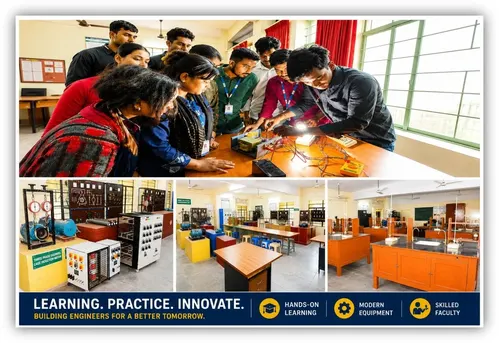
4. Lab Realities: Look Past the Shiny Curtains
When you go for a physical campus visit, ditch the guide. Walk straight down
the corridors and look inside the practical labs.
For Tech Tracks (CSE/IT/AI/ML):
Look at the hardware. Do they have dedicated cloud environments, active IoT
setups, and high-performance workstations capable of training real machine
learning models? Or are students stuck running modern algorithms on ancient,
lagging dual-core desktops?
For Core Tracks (Mechanical/Civil/Electrical):
Check the heavy machinery. Are the testing units calibrated? Do they have
up-to-date power system simulators and fully licensed design software like
AutoCAD, SolidWorks, or MATLAB?
5. Branch Diversity in Placements
Every college loves to talk about software placements because the numbers
look flashy. But what if you actually want to build physical infrastructure,
design smart grids, or work in automation? You need to look beyond generic
placement support and recruitment opportunities and make
sure the college actively invites core engineering firms to campus, rather
than dumping every single mechanical, civil, and electrical student into
mass-recruitment IT training paths.
6. Real Industry Tie-Ups and Centres of Excellence
The technology landscape changes way faster than a standard academic board
can update a textbook. Ask if the campus features active Centres of
Excellence (CoE) backed directly by global players like AWS, Cisco, Oracle,
or major domestic manufacturing groups. These need to be active hubs where
you can work on live industry problems, clear professional certifications,
and pick up skills that actually make you employable on day one.
7. Faculty Credentials: Look at the Core Staff
A college is only as strong as the people standing at the whiteboard.
Dig into the actual departmental directories:
What percentage of the core branch professors hold a full Ph.D.
from reputed national institutions?
Are they actively doing research, filing engineering patents,
and speaking at major technical conferences?
Are your main subject classes actually taught by these senior
professors, or are they constantly being handed off to junior
teaching assistants?
8. The Incubation Test: Is There an Actual Start-up Culture?
Modern engineering isn't just about polishing a resume to fit into
a corporate cubicle; it's about having the space to build your own
ideas. Check if the college houses a recognized start-up incubator
backed by Start-up Odisha, the MSME ministry, or private venture
capital networks.
Ask the admission desk a direct, blunt question:
"Exactly how many student ideas have turned into registered
start-ups here over the past 24 months?"
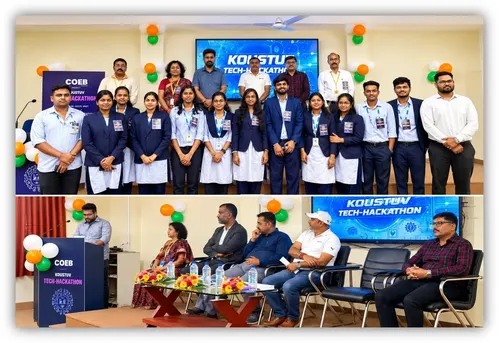
9. Coding Culture, Tech Clubs, and Hackathon Records
Your real development as an engineer won't happen inside a quiet
lecture hall. It happens during late-night coding sprints,
high-pressure hackathons, and inter-collegiate design battles.
Look up the active student chapters on campus—things like IEEE,
SAE India, or ACM. See how their teams actually perform when they
compete in the Smart India Hackathon (SIH) or major tech festivals
at regional IITs and NITs.
10. The Location Factor: Proximity to Industrial Corridors
Geography isn't just about a short commute; it dictates how easily
you can access real industry networks, internships, and mentors.
Colleges situated near active economic hubs like Infocity,
Info Valley, or the Mancheswar Industrial Estate have a massive
structural edge.
Technical leads, corporate recruiters, and expert guest lecturers
can drop by for an afternoon session easily. More importantly,
being close to these tech parks means you can take up meaningful
winter or summer internships without having to relocate.
The Smart Student's Final Checklist
Before you sign the final registration papers or lock in your choices
on the admission portal, make sure you have absolute clarity on these
four points:
The True Cost:
Does the total four-year investment align cleanly with verified,
local median placement data?
The Credentials:
Are the NAAC and NBA rankings active, fully verified,
and specific to your chosen branch?
The Infra:
Do the practical labs have modern, licensed software tools
and functional physical machinery?
The Location:
Is the college positioned close enough to industry hubs
for internships, networking, and exposure?
Frequently Asked Questions (FAQs)
The majority of government and private colleges here take admissions via
JEE Main and OJEE (Odisha Joint Entrance Examination) counselling tracks.
Top-tier institutions like IIT Bhubaneswar require JEE Advanced, while
major private universities like KIIT and SOA conduct their own entrance
examinations.
Yes. Many private institutions offer direct admission through management
quota or merit-based admissions, subject to eligibility criteria and
minimum qualifying marks.
Computer Science Engineering (CSE), AI/ML, Data Science, and Cyber
Security currently see the highest placement demand. However,
Mechanical, Civil, and Electrical Engineering continue to offer
strong opportunities through industry-focused institutions.
Figuring out the right B.Tech path based on your rank, career goals, and budget can get overwhelming fast. [Click here to connect (One outer link) directly with an Academic Advisor at COEB (website)] to set up a completely free, 1-on-1 counselling session. Our team will help you look at the top choices in Bhubaneswar and put together a strategic choice-filling list for the upcoming counselling rounds.
Want to know more about campus life and latest updates?
Follow COEB on
Facebook
and
Instagram.
The Final Takeaway
Your engineering journey depends heavily on your own drive, but the
foundational platform your college provides determines how hard your
initial transition into the industry will be. If you want a solid ROI,
real hands-on lab experience, and an education that actually translates
to a workplace, prioritize institutions that tick all 10 boxes on this list.
Among the options across the city, the College of Engineering
Bhubaneswar (COEB) offers a clear model of this structural balance.
Rather than built on flashy marketing, its reputation as the
best engineering college in Bhubaneswar
comes from practical execution, combining modern labs, experienced
faculty, and direct proximity to major industrial hubs to give students
a real, value-driven education.
Do the work, check out the campuses yourself, ask the difficult
questions, and pick the place that actually fits your future.