If you're sitting in Cuttack, Sambalpur, or Berhampur right now staring at your rank card, you already know how suffocating this whole family discussion gets.
Your parents want the government tag. "Get into a state college, save money, life is sorted."
You're probably on your phone checking Reddit or asking seniors in Telegram groups about Top Private Engineering Colleges of Odisha , and whether spending four years studying an old syllabus in a small town will actually get you a tech job in 2026.

Here is the plain truth. A degree isn't a trophy to hang in your drawing room. It’s supposed to get you hired. So how do these campuses actually compare on the ground?
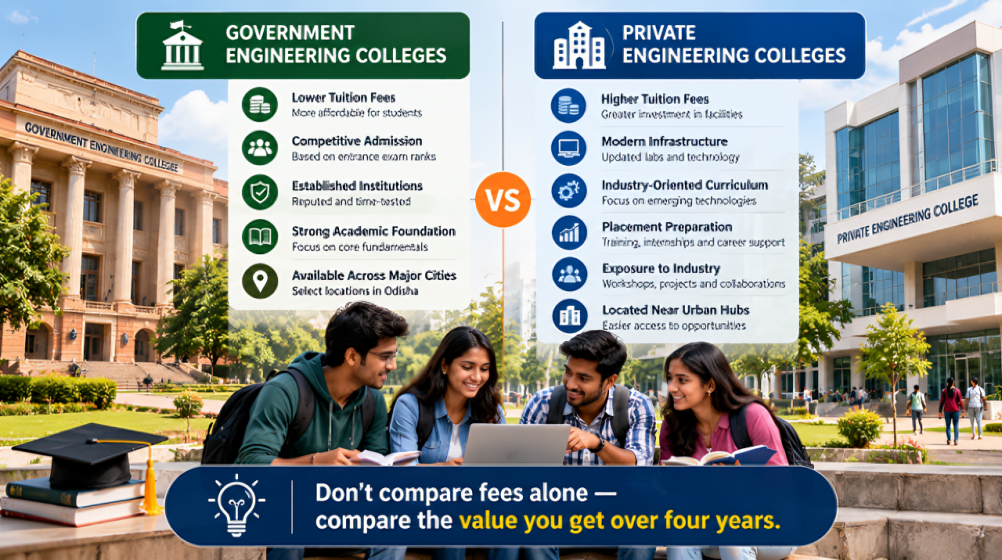
1. Fees vs what you get back
Government colleges—think OUTR in BBSR, VSSUT in Burla or IGIT Sarang—are state-funded. A four-year degree there costs very little. If your family is tight on cash, that low tuition is a huge relief. No doubt about it.
But saving money on admission day doesn't mean much if you're sitting without an offer letter six months after passing out.
If a private college charges more but gives you continuous practice in full-stack dev, cloud
2. The syllabus problem
What you learn in class matters a lot more now than it did ten years ago.
State universities move like turtles when updating their books. Adding something simple like Generative AI or DevOps means endless board meetings, approvals, and state paperwork. So while tech companies move forward, students spend semesters studying old programming frameworks and hardware setups nobody uses anymore.
Private autonomous colleges move much faster. They have to.
Their admissions depend on placements, so they tweak electives every year. They can drop AWS Cloud, Cyber Security, or Data Analytics directly into your weekly timetable—meaning you don't have to spend every night trying to learn modern tech by yourself on YouTube.
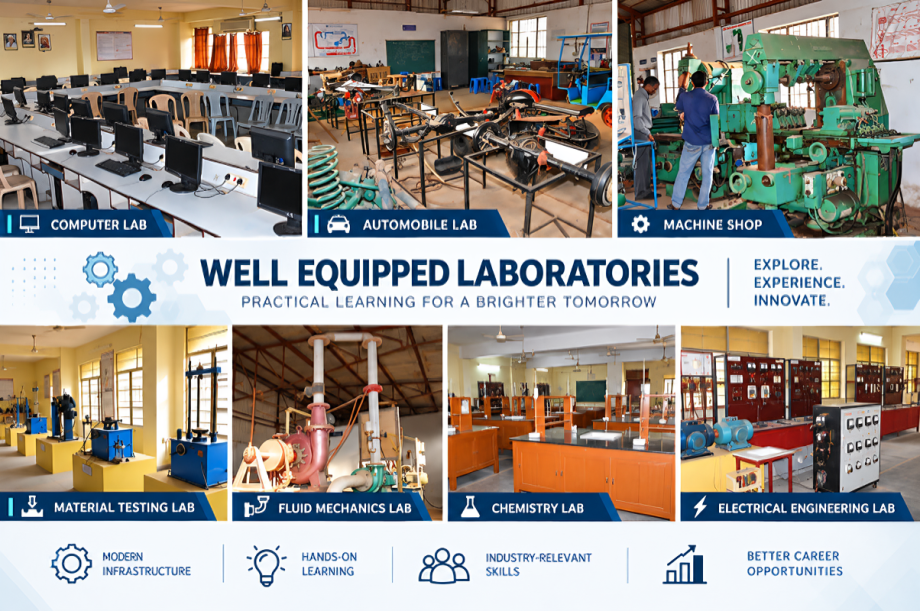
3. Labs that work
You can't learn coding or hardware out of a library textbook. You need machines and tools that actually run.
Top central campuses like NIT Rourkela have world-class labs. But mid-tier regional government colleges? You often deal with slow PCs, bad internet, and administrative delays every time a software license expires.
Private engineering setups have to keep their labs updated to attract new batches. Good ones invest in:
- Systems that can handle heavy dev tools and machine learning tasks.
- Pre-licensed software for coding, circuit design, and simulation work.
- Active coding clubs and campus hackathons where you build actual working apps instead of filling practical notebooks just for internal marks.
- When HR teams come to campus, they pick the candidate who built and fixed real projects over someone who just memorized notes to pass semester exams.
4.Placements: You're either guided or you're on your own
Big brand names visit government colleges automatically. But inside the campus, you are mostly on your own. The top 5% to 10% usually get great offers. The rest of the class is left to figure out off-campus drives, job portals, and cold LinkedIn messages all by themselves.
Private colleges handle placements with a tight leash because their survival depends on their statistics. They start grooming you early:
Aptitude practice: Weekly speed tests so you don't get kicked out in the first written elimination round.
Communication & GD rounds: Regular mock talks so you don't freeze up or struggle with basic confidence.
Technical mocks: Face-to-face practice interviews with senior faculty or industry alumni.
Placement cells: Active teams reaching out to IT services, core companies, and mid-sized startups
For an average student who needs regular pressure and feedback to convert book knowledge into an actual job offer, that daily routine makes a massive difference.
5. Why location matters
For students comparing Top Private Engineering Colleges of Odisha, studying in or right next to an IT hub like Bhubaneswar can make a significant difference:
Near Info-city and tech parks: Easy to attend weekend workshops, tech talks, and local developer meetups.
Student community: Constant inter-college hackathons and open-source groups happening around the city.
Recruiter convenience: HR teams prefer visiting well-connected capital campuses over traveling hours into remote districts.
6. So, what should you choose?
If you got a high rank in JEE Main, have a strict budget, and you're the kind of self-driven student who will build projects on your own without needing a professor to push you, take the government college.
But if you need modern lab setups, an updated syllabus, and structured placement training that gets you ready before your final semester, looking closely at private campuses in the capital is the smarter move
If you're comparing Top Private Engineering Colleges of Odisha and looking around Bhubaneswar, College of Engineering Bhubaneswar (COEB) is a solid practical option.
Right near the capital's tech corridor, COEB blends regular lab work with early placement prep. They build aptitude practice, mock interviews, and group discussion drills straight into your regular weekly schedule—so you walk out with technical skills and the actual confidence to clear an interview.
Look beyond the glossy flyers. Pick the place that gives you the daily routine, tools, and push you need to build a real career.Frequently Asked Questions (FAQs)
Yes. Most private colleges fill seats through OJEE counselling using JEE Main ranks. A few private universities run their own tests, but JEE Main is the primary entry everywhere.
Yes. Being near Info-city and tech branches makes attending walk-ins, industry workshops, and guest lectures much easier compared to studying in remote districts.
Ignore "100% Placements" banners or a single high package. Ask for the median package—that's the middle number where half the batch made more and half made less. Also see if the same companies show up year after year.
Autonomous colleges write their own syllabus and hold internal exams under university oversight, letting them change courses fast. Affiliated colleges follow BPUT's state syllabus. Both give valid degrees, but autonomous colleges adapt quicker to industry changes.
Good private colleges run regular aptitude classes, spoken English practice, and mock GDs right alongside regular technical lectures so you don't get filtered out early.
Only if the college has good hardware labs, workshop equipment, and active ties with core manufacturing or infrastructure companies. Make sure you get actual lab time, not just chalkboard lectures.
COEB combines practical lab work with daily placement prep. Being near Bhubaneswar's IT corridor, plus running regular aptitude drills, technical mock interviews, and soft-skill sessions, gives students a smooth transition into their first job.